Tuesday, November 29, 2016

Swelling legs? due to pregnancy? Or Any other reason?

Here is the cure.

1. Buy Epsom Salt from a Pharmacy. (1KG is about 200LKR)


2. Get about 40-50g to a clean cup


3. Add some hot water and fill the cup to dissolve the Epsom Salt properly


4. Add the bandage gauze cloths to the cup to absorb the salt mixture


5. Squeeze the cloths so that absorbed salt will not spill out


6. Gently apply the cloth around the leg


7. Use a gauze strip and roll it around the leg to keep the wet cloths stick to the leg


8. When both legs are done, pour the additional Epsom salt mixture and make the cloths wet.

9. Wear this during the night. Swelling will be reduced in the morning.

10. Continue the same for each night.

Happy & Healthy life!!!

Sunday, November 6, 2016

Gut bacteria 'may help drugs fight cancer'

Source : http://www.bbc.com/news/health-37874918


Bacteria living deep inside the digestive system seem to alter how cancer drugs work, a study suggests.
Immunotherapies - which harness the body's own defences to fight tumours - can clear even terminal cancer in a small proportion of patients.
However, a small study by the University of Texas found those harbouring a more diverse community of gut bugs are more likely to benefit.
Cancer Research UK said understanding gut bugs had "great potential".
The human body is home to trillions of micro-organisms - estimates suggest our own tissues are so heavily outnumbered that our bodies are just 10% human.
And a growing wealth of studies shows these microbes can influence our immune systems and have been implicated in auto-immune diseases and allergies.

Higher levels

Immunotherapies are one of the most exciting breakthroughs in treating cancer. They work by taking the brakes off the immune system to help it to attack tumours more easily.
The research group compared the gut bacteria in 23 patients who responded to the therapy and 11 who did not.
Dr Jennifer Wargo, a melanoma surgeon and scientist, told the BBC News website: "We found a night-and-day difference in the diversity of bacteria species in the faecal samples."
The study, presented at the National Cancer Research Institute's Cancer Conference in Liverpool, found Ruminococcus bacteria in much higher levels in those that responded to treatment.
It suggests that it may be possible to boost the effectiveness of immunotherapy by altering the balance of bacteria in the gut.

'Scratch the surface'

Procedures such as a trans-poo-sion - a transplant of faecal matter containing beneficial bacteria - are already used as a treatment for some diseases.
Dr Wargo added: "It is hugely plausible I think - we still need to dig a little deeper, but I think we're on to something.
"I think it really does shape our body's immune response as a whole and to cancer."
It is not yet clear if the differences in bacteria are the cause of the better response.
People with diets containing more fruit and vegetables tend to have a richer set of gut bugs, so it is possible that it is those with a healthier lifestyle that respond better to therapy.
"It might point to a healthy diet increasing your chances, which I think would be a great message," she added.
Sir Harpal Kumar, chief executive of Cancer Research UK, said: "Our bodies are filled with trillions of bacteria, and we are just beginning to scratch the surface of understanding their great potential.
"It's really interesting and exciting to see new evidence emerge on the close connection between the immune system and the bacteria living in our guts. As this, and several other studies, have shown, manipulating these bacteria could be exploited in future to help patients respond better to treatment."

High Cholesterol Triggers Osteoarthritis, Study Finds

Source : http://fitnessmagz.club/high-cholesterol-triggers-osteoarthritis-study-finds/

Osteoarthritis (OA) is the most prevalent type of arthritis, according to the CDC, an estimated 30.8 million adults in the United States had OA from 2008 to 2011. Also, the report states that 1 in 2 people might develop knee osteoarthritis by the age of 85, while 2 in 3 obese people will also develop this joint disorder in their lifetime. Many factors contribute to the development of this disease, but scientists keep identifying new ones as well. For example, the latest study showed that high cholesterol could trigger osteoarthritis.

High Cholesterol and OA link

High cholesterol is strongly associated with increased risk of heart diseases, but its danger doesn’t stop there. The study carried out by a team of researchers at the Queensland University of Technology showed that high cholesterol levels could also lead to bone loss. They conducted this research primarily because the contribution of metabolic factors on the severity of OA isn’t fully understood or appreciated.
That’s why they used mice and diet-induced hypercholesterolemic rats to explore the effects of cholesterol on the progression of the most common type of arthritis. Surgical destabilization of the knee was performed to induce the OA in animals so scientists can analyze how it acts in combination with familial hypercholesterolemia. The FASEB Journal published the results of this groundbreaking study which demonstrated that both mice and rats had osteoarthritis-like changes such as:
  • Loss of proteoglycans
  • Collagen and aggrecan (cartilage-specific proteoglycan protein) degradation
  • Formation of osteophyte (a bony projection linked to degradation of joint cartilage)
  • Alterations to subchondral bone architecture
  • Cartilage degradation
Findings also showed that the high cholesterol levels led to mitochondrial dysfunction, overproduction of reactive oxygen species, and heightened expression of degenerative markers in the breakdown of cartilage and chondrocytes (cells which secreted matrix of cartilage and became embedded in it).
Scientists concluded the study explaining that higher cholesterol levels have the potential to precipitate progression of OA through mitochondrial dysfunction in chondrocytes. These results shed the new light on this joint disorder, and they show that although it was assumed that scientists uncovered different angles of this disease, there’s still a lot we don’t know about it.

Importantly, using antioxidants to address the mitochondrial dysfunction is a good way to attenuate the progression of osteoarthritis. Scientists exposed both mice and rats to the cholesterol-lowering drug Atorvastatin and mitochondrion-targeted antioxidants, the development of OA decreased significantly, comparing to animals from the control group. According to scientists, the study analyzed the potential therapeutic role of antioxidants that target mitochondria in osteoarthritis induced by high cholesterol. Their goal is to create new therapies and medications that would be beneficial for OA sufferers.


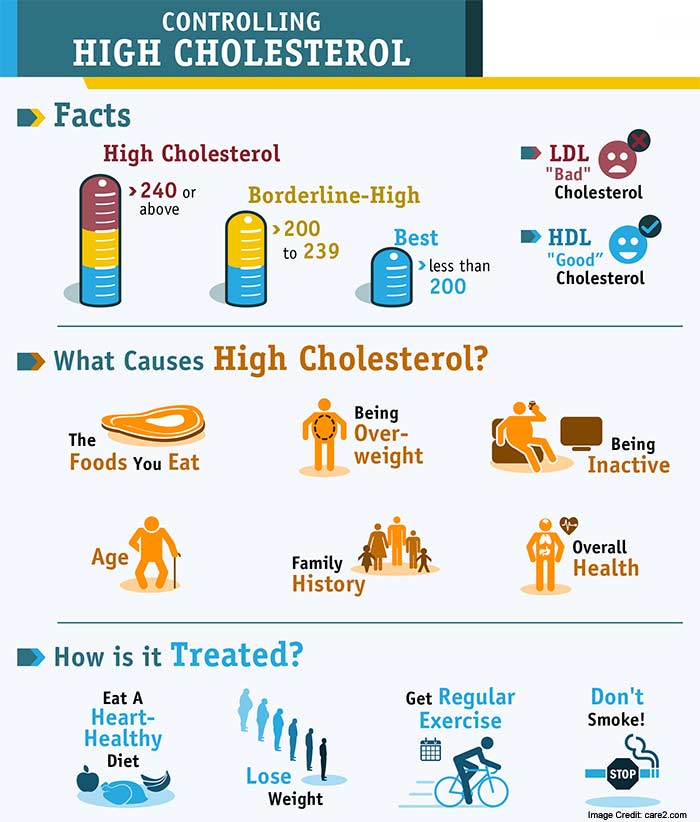
Managing Cholesterol

According to the CDC, 73.5 million adults or 31.7% of the US population have increased levels of LDL or bad cholesterol. Only 1 out of 3 people with LDL cholesterol has the condition under control. High cholesterol levels are a risk factor for many diseases including twice the risk of heart disease, and the latest research showed it could also trigger osteoarthritis. Luckily, you can do a lot about that with simple tips to put it under control. For example:
  • Avoid consumption of trans fats
  • Include olive oil to your diet
  • Get enough of Omega-3 fatty acids
  • Exercise
  • Increase fiber intake
  • Quit smoking
  • Manage healthy weight
  • Limit alcohol intake.

Conclusion

The relationship between osteoarthritis and metabolic factors wasn’t largely discussed. However, bearing in mind that cholesterol plays a major role in a variety of processes in the organism, scientists from Australia conducted a study to analyze its impact on osteoarthritis and found that higher cholesterol levels do trigger progression of the joint disorder. This revelation provides new insight into the disease and shows there’s a lot the science hasn’t discovered yet.